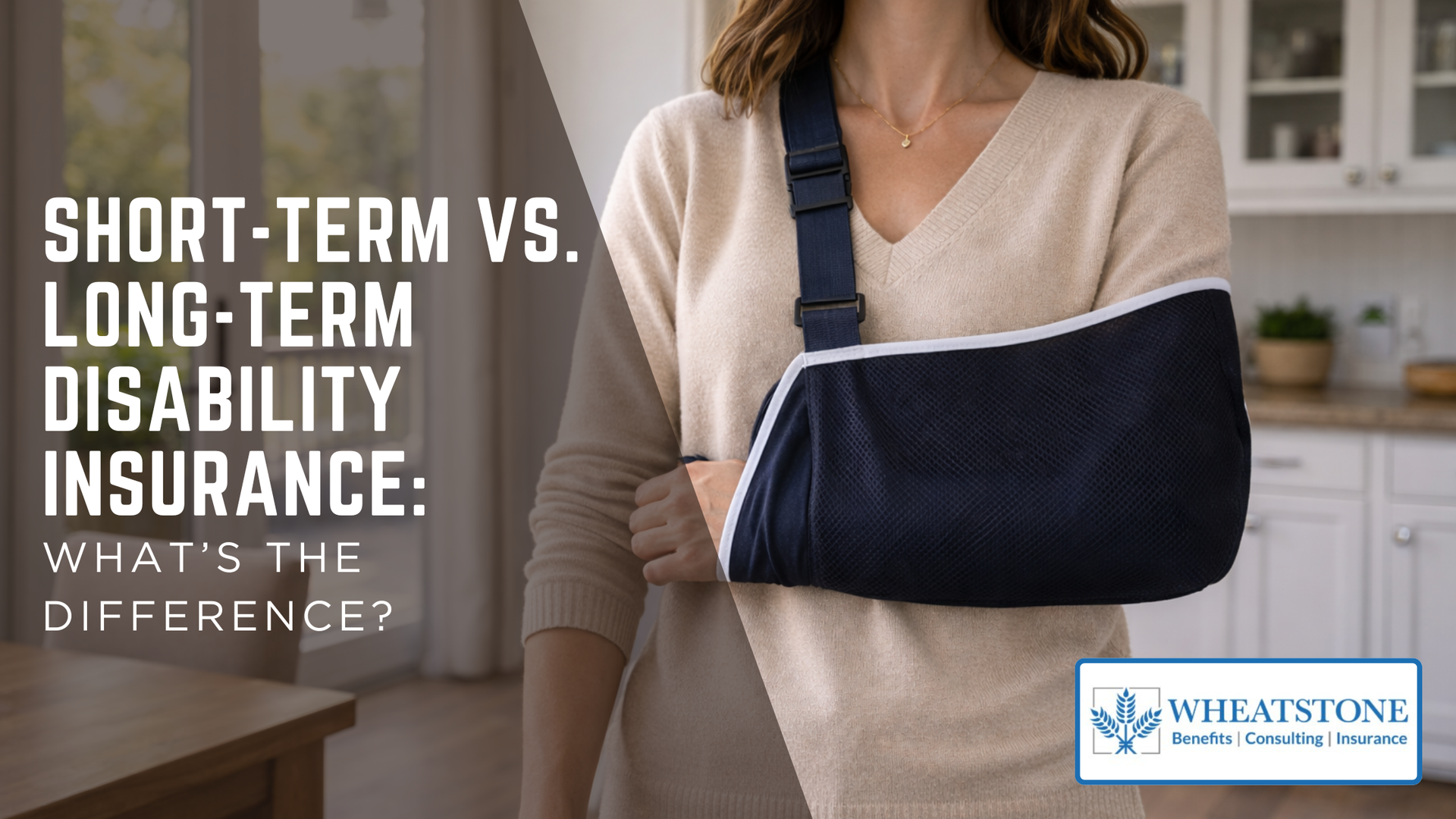
Short-term and long-term disability insurance both replace a portion of income when illness or injury prevents work, but they serve different time horizons and risks. Short-term coverage bridges immediate gaps, while long-term coverage protects against extended or permanent loss of earning ability. In our years of professional service advising employees and employers in Houston, TX, we’ve found that understanding how these policies work together is key to financial resilience.
Why Disability Insurance Deserves More Attention
Most people insure their homes and vehicles, yet their ability to earn an income—their most valuable asset—often goes underprotected.
Disability insurance is designed to protect that income when health interrupts work. Knowing the difference between short-term and long-term disability insurance helps you build a plan that actually works when life doesn’t go as planned.
Short-Term Disability Insurance: Immediate Income Protection
Short-term disability (STD) insurance is intended to replace income for a limited period following a qualifying
illness or injury.
What Short-Term Disability Typically Covers
STD policies commonly provide:
- Partial income replacement (often 50%–70% of wages)
- Coverage for non-work-related illnesses or injuries
- Benefits lasting a few weeks up to several months
These policies are designed to keep bills paid while you recover from temporary conditions.
Typical Waiting Periods and Benefit Lengths
Short-term disability usually includes:
- A short elimination period (often 0–14 days)
- Benefit durations ranging from 3 to 6 months
In our professional experience, STD coverage is most valuable during the earliest phase of recovery when savings can be quickly depleted.
Long-Term Disability Insurance: Protection for Extended Recovery
Long-term disability (LTD) insurance addresses more serious or prolonged conditions that prevent a return to work.
What Long-Term Disability Is Designed to Do
LTD policies generally:
- Begin after STD benefits end
- Replace a portion of income over years—or until retirement age
- Cover severe illnesses, injuries, or chronic conditions
This
coverage is critical when recovery takes longer than expected or when returning to work isn’t possible.
How Waiting Periods Differ Between STD and LTD
Waiting periods—also called elimination periods—define when benefits begin.
Comparing Elimination Periods
- Short-term disability: Very short waiting periods
- Long-term disability: Longer waiting periods (commonly 90–180 days)
These periods are intentional, ensuring STD handles immediate needs while LTD steps in for extended protection.
Benefit Duration: The Core Difference
The most important distinction between STD and LTD is how long benefits last.
How Long Benefits Can Continue
- STD: Weeks to months
- LTD: Several years or until retirement age, depending on policy
In Houston, TX, we’ve seen families rely on LTD coverage to maintain stability through prolonged medical challenges.
Conditions Commonly Covered by Disability Insurance
Both STD and LTD typically cover a wide range of conditions.
Examples of Covered Conditions
These may include:
- Surgeries and recovery periods
- Serious injuries
- Chronic illnesses
- Mental health conditions (subject to policy terms)
- Pregnancy-related complications
Coverage specifics vary by
policy, making careful review essential.
Employer-Sponsored vs. Individual Disability Coverage
Disability insurance may be offered through an employer or purchased individually.
Employer-Sponsored Disability Insurance
These plans often:
- Provide basic STD or LTD coverage
- Use group pricing
- Offer limited customization
However, benefits may be capped and tied to employment status.
Individual Disability Insurance
Individual policies can:
- Offer higher benefit amounts
- Provide portable coverage
- Be customized to income and occupation
In our years of professional service, we’ve seen individual policies fill important gaps left by employer plans.
How Much Income Replacement Is Enough?
Disability insurance rarely replaces 100% of income.
Typical Replacement Percentages
Most policies replace:
- 50% to 70% of gross income
This balance encourages return to work when possible while providing meaningful financial support.
Tax Considerations for Disability Benefits
Tax treatment depends on how premiums are paid.
What Affects Taxation
- Employer-paid premiums often result in taxable benefits
- Employee-paid premiums typically produce tax-free benefits
Understanding this distinction helps set realistic expectations during a claim.
Common Misunderstandings About Disability Insurance
In our professional experience, several myths persist.
Frequent Misconceptions
- “Workers’ comp will cover me” (only for work-related injuries)
- “I’ll use savings instead” (often insufficient for long-term needs)
- “Disability won’t happen to me” (most claims are illness-related)
Clarifying these points leads to better planning decisions.
Why Many People Need Both STD and LTD
Short-term and long-term disability insurance are complementary—not competing—coverages.
How They Work Together
- STD handles immediate recovery periods
- LTD protects against extended income loss
- Together, they reduce financial gaps during disability
In our years of professional service, comprehensive coverage consistently outperforms single-policy approaches.
Evaluating Disability Coverage at Different Life Stages
Needs change over time.
When to Review Disability Coverage
Reviews are especially important when:
- Income increases
- Family responsibilities grow
- Health changes
- Employment status shifts
Professionals building careers near major business hubs like the Energy Corridor or working long hours near The Galleria often reassess coverage as responsibilities expand.
Disability Insurance and Business Continuity
For employers, disability coverage supports workforce stability.
Employer Benefits We Commonly See
- Reduced financial stress for employees
- Faster return-to-work outcomes
- Improved morale and loyalty
Disability benefits are a key component of comprehensive benefits strategies.
Choosing the Right Disability Strategy
Selecting
disability coverage isn’t about choosing one policy over the other—it’s about designing protection that matches real risks. Short-term disability provides immediate relief, while long-term disability safeguards the future.
In Houston, TX, we’ve helped individuals and organizations build disability strategies that support both recovery and long-term security.
Building Financial Resilience with the Right Coverage
Disability insurance protects income when it matters most. Understanding the difference between short-term and long-term coverage allows you to plan with confidence, knowing that both immediate and extended risks are addressed.
At Wheatstone Benefits Group, LLC, we aim to provide comprehensive insurance policies that make your life easier. We want to help you get insurance that fits your needs. Get in touch with our company at (713) 470-0222 to learn more about our offerings. Today, by
CLICKING HERE, you may get a free estimate.
Wheatstone Benefits Group, LLC
Address:
Houston, TX
Phone:
(713) 470-0222
Website:
https://www.wheatstonegroup.com/